

Understanding table hockey penalties can transform your gameplay from frustrating rule violations to confident, strategic play. Whether you’re just starting out or competing at higher levels, knowing the most common penalties helps you avoid costly mistakes and maintain fair competition. This guide breaks down the key penalties you’ll encounter, explains how officials evaluate infractions, and provides practical tips to keep your game clean while staying competitive.
Table of Contents
- How To Evaluate Table Hockey Penalties: Criteria And Rules
- Top 5 Common Table Hockey Penalties Explained
- Comparing Penalties: Severity, Frequency, And Impact On Your Game
- How To Avoid Common Penalties And Improve Your Table Hockey Skills
- Frequently Asked Questions About Table Hockey Penalties
Key takeaways
| Point | Details |
|---|---|
| Most penalties stem from stick infractions | Slashing, high-sticking, and hooking account for the majority of penalty calls in table hockey |
| Intent and outcome determine severity | Officials assess whether contact was accidental or deliberate and if injury occurred |
| League rules vary slightly | While most follow IIHF guidelines, local adaptations exist for specific competitions |
| Penalty knowledge improves strategy | Understanding infractions helps you play aggressively without crossing into illegal territory |
| Practice and awareness reduce violations | Focused stick control and spatial awareness are your best tools for avoiding penalties |
How to evaluate table hockey penalties: criteria and rules
Officials don’t call penalties randomly. They follow specific criteria that help maintain consistency across games and leagues. Officials determine penalty severity based on intent, injury, and nature of infraction, with the same contact resulting in different penalties depending on these factors. A stick tap that catches an opponent’s hand might be incidental contact in one scenario but slashing in another if the swing was deliberate or forceful.
Most table hockey leagues base their rules on the IIHF Rule Book, which provides the international standard for hockey regulations. However, leagues often create in-house rules for 2025-26 that adapt these guidelines to their specific needs. These adaptations might adjust penalty times, modify specific infractions, or add clarifications for situations unique to table hockey gameplay. Before competing in a new league, review their specific rulebook to understand any variations.
When both players receive minor penalties simultaneously, the game shifts to 4-on-4 play rather than leaving both teams shorthanded. This coincidental minor rule maintains competitive balance while still penalizing both infractions. Understanding this dynamic helps you adjust your strategy during these moments, as the more open ice creates different offensive and defensive opportunities.
Pro Tip: Keep a copy of your league’s current rulebook handy and review it before each season. Rules evolve yearly, and staying current prevents surprises during critical game moments. You can track table hockey progress more effectively when you understand exactly what behaviors officials are watching for.
Top 5 common table hockey penalties explained
Five penalties dominate the infraction reports in table hockey. Mastering these keeps you on the playing surface instead of in the penalty box.
-
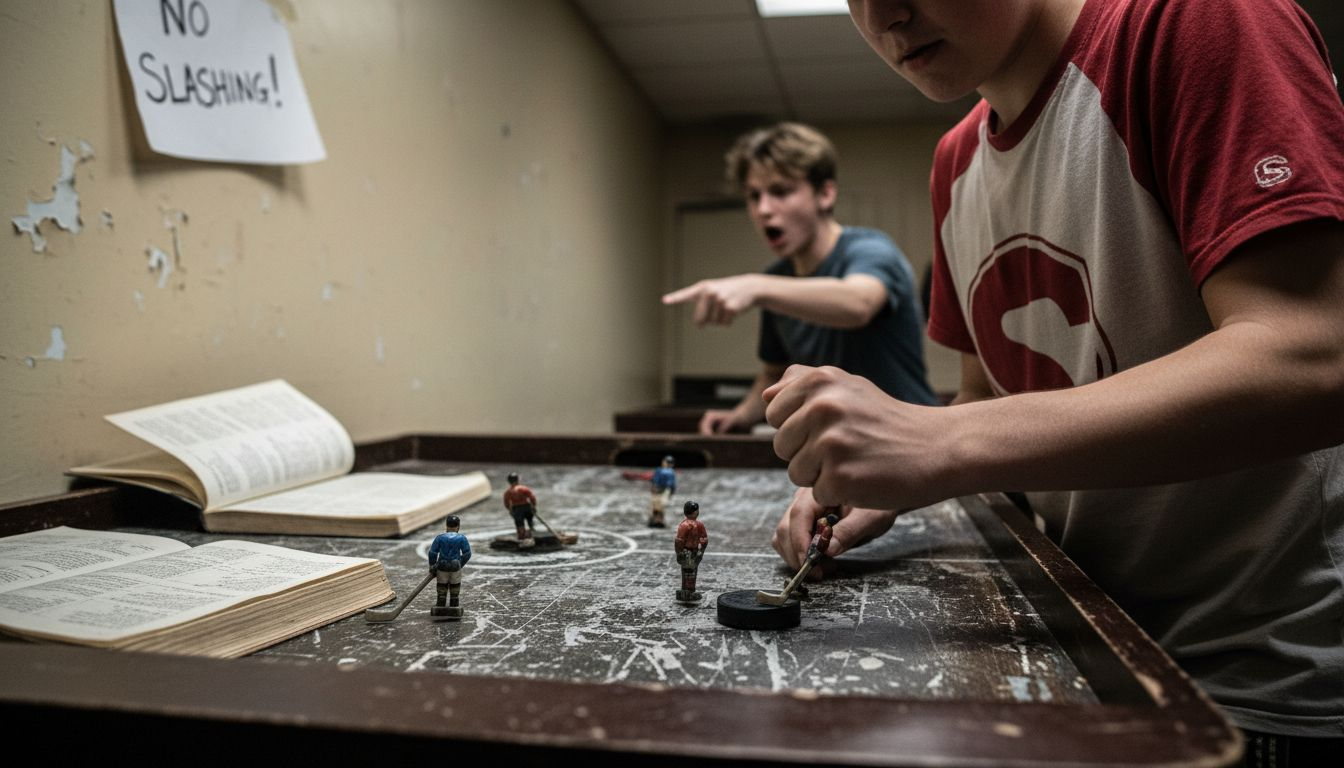
Slashing: This penalty occurs when you swing your stick at an opponent’s hands, arms, or body. Slashing became the most frequently called hockey penalty after 2017-18 rule changes that cracked down on stick infractions. What counts as slashing? Any forceful stick contact that isn’t a legitimate play on the puck. Tapping an opponent’s stick during a poke check is legal; swinging at their hands to dislodge the puck is not. The penalty typically results in two minutes in the box, though severe cases with injury can escalate to four minutes or more.
-
High-sticking: When your stick makes contact with an opponent above shoulder height, officials call high-sticking. This violation is particularly serious because it poses injury risk to players’ faces and heads. A minor high-sticking penalty means two minutes off the ice. If the contact draws blood, the penalty automatically becomes a double minor at four minutes. Players often commit this infraction during follow-through on shots or when reaching for elevated pucks, making stick awareness crucial.
-
Hooking: Using your stick to impede an opponent’s movement by hooking their body or stick constitutes this penalty. Hooking disrupts fair competition by preventing skilled players from using their speed and agility advantages. The infraction typically draws a two-minute minor. You might hook accidentally when trying to poke-check from behind or when an opponent accelerates past you and your stick catches their midsection. Master balance in table hockey to maintain better positioning that reduces hooking temptation.
-
Tripping: This penalty happens when you use your stick, leg, or body to cause an opponent to lose balance and fall. Like hooking, tripping is a minor penalty worth two minutes. The key distinction is that tripping specifically results in the opponent going down, while hooking might just slow them. Common tripping scenarios include stick-checking low and catching skates, or extending your leg to impede an opponent’s stride. Both deliberate and accidental trips receive penalties, as officials focus on the action rather than intent for this infraction.
-
Interference: When you impede an opponent who doesn’t have the puck and isn’t directly involved in the play, you commit interference. This penalty maintains the flow of table hockey by ensuring players can only engage opponents actively participating in the action. Interference draws a two-minute minor and often occurs when players try to block passing lanes or prevent opponents from reaching loose pucks. The complete guide to hockey penalties notes that interference calls require officials to judge whether the impeded player had a reasonable chance to affect the play.
Pro Tip: Watch professional table hockey matches and note when penalties are called. You’ll start recognizing the specific movements and situations that trigger infractions, helping you avoid them during your own games. The non-screen game time benefits of this practice extend beyond penalty avoidance to overall game comprehension.
Comparing penalties: severity, frequency, and impact on your game
Not all penalties affect your game equally. Understanding their relative severity and frequency helps you prioritize which infractions to avoid most carefully.
| Penalty Type | Typical Duration | Frequency | Game Impact | | — | — | — | | Slashing | 2 minutes | Very High | Moderate; common but predictable | | High-sticking | 2-4 minutes | High | Severe if blood drawn; reputation risk | | Hooking | 2 minutes | High | Moderate; disrupts offensive flow | | Tripping | 2 minutes | Moderate | Moderate; often results from defensive desperation | | Interference | 2 minutes | Moderate | Low to Moderate; prevents play development |
Slashing is the most frequent penalty in modern hockey after 2017-18 rules changes, making it the infraction you’re most likely to commit or witness. While typically resulting in just two minutes, repeated slashing penalties can frustrate teammates and coaches, signaling poor stick discipline. The frequency means officials watch for it constantly, so even minor stick infractions get called.
High-sticking carries the highest severity risk because of the double-minor possibility. Drawing blood transforms a manageable two-minute penalty into a four-minute power play for your opponent, potentially changing game momentum. Beyond the time penalty, high-sticking damages your reputation as a controlled player and may result in supplementary discipline for repeat offenders.
Hooking and tripping occur at similar rates but in different game situations. Hooking typically happens during transition play when you’re trying to slow a faster opponent, while tripping often results from defensive zone scrambles. Both disrupt the opponent’s possession and flow, making them tactical fouls in some situations, though officials rarely view them favorably.
Interference penalties, while less frequent, have unique strategic implications. By preventing an opponent from reaching the play, you potentially stop a dangerous scoring chance before it develops. However, the two-minute penalty often costs more than the prevented opportunity would have, making interference generally a poor trade-off. Learning table hockey in Europe guide strategies can show you how top players position themselves to defend without interfering.
How to avoid common penalties and improve your table hockey skills
Knowing penalties is one thing; avoiding them requires deliberate practice and awareness. These strategies help you stay disciplined while maintaining competitive intensity.
Stick control is your first line of defense against slashing penalties. Practice keeping your stick on the playing surface during defensive plays rather than raising it to swing at opponents. When poke-checking, use short, controlled jabs at the puck rather than sweeping motions that might catch hands or arms. Your stick should always target the puck, not the player controlling it.
Maintaining awareness of stick height prevents high-sticking infractions. During shot follow-throughs, consciously control your stick’s elevation rather than letting it rise naturally. When battling for elevated pucks, approach from angles that keep your stick below shoulder height even when fully extended. This awareness becomes automatic with practice but requires conscious attention initially.
Positioning and timing reduce hooking and tripping risks more effectively than stick work alone. Instead of reaching from behind to hook an opponent, work on your skating to maintain better defensive angles. Anticipate plays earlier so you’re not desperately trying to stop opponents who’ve already beaten you. Good positioning means you can make legal plays on the puck without resorting to infractions.
Respecting opponents’ space prevents interference penalties and improves sportsmanship. Before engaging an opponent, verify they have the puck or are directly involved in the play. Give players room to skate their routes unless they’re actively controlling the puck. This discipline keeps the game flowing and prevents unnecessary whistles that disrupt your team’s momentum.
Pro Tip: Understanding ice hockey rules is essential for appreciating the sport and reducing penalties, so dedicate time each month to reviewing rule updates and clarifications. Rules evolve as the sport develops, and staying current gives you a competitive advantage. Subscribe to your league’s communications and attend any rules clinics offered before seasons begin. You can also improve table hockey performance by tracking which penalties you commit most frequently and focusing practice sessions on those specific areas.
Improve your table hockey game with our gear and resources
Mastering penalties is just one piece of becoming a complete table hockey player. At your table hockey friend, we provide the equipment, training resources, and community support you need to elevate every aspect of your game. From beginners learning the basics to competitive players refining advanced techniques, our platform connects you with tools that translate penalty knowledge into on-table success.
Our expert guides cover everything from fundamental stick handling that prevents slashing penalties to advanced positioning strategies that eliminate hooking and interference infractions. The master balance blog teaches you the body control that keeps your stick disciplined, while the track progress blog helps you monitor improvement in penalty-free play over time. Join the world’s biggest table hockey community today and transform rule knowledge into championship-level performance.
Frequently asked questions about table hockey penalties
What happens if both players get a minor penalty at the same time?
When both players receive minor penalties simultaneously, officials call coincidental minors. Coincidental minors lead teams to play 4-on-4 temporarily rather than leaving both teams shorthanded. Both players serve their full two-minute penalties, but teams maintain equal strength on the playing surface. This rule preserves competitive balance while still penalizing both infractions.
Do penalty rules vary between table hockey leagues?
Core penalty rules typically follow IIHF guidelines across most leagues, providing consistency in fundamental infractions like slashing, hooking, and tripping. However, in-house rules adapt the IIHF guidelines domestically, creating variations in specific situations or penalty durations. Always review your specific league’s rulebook before competing, as these adaptations can affect gameplay strategy and what officials watch for during matches.
How long is a typical minor penalty in table hockey?
Standard minor penalties last two minutes, during which the penalized player must leave the playing surface and their team plays shorthanded. Some leagues allow penalties to end early if the opposing team scores during the power play, though this varies by rulebook. Major penalties typically last five minutes and don’t end early regardless of goals scored, reflecting their more serious nature.
Are repeated penalties treated differently?
Referees track penalty patterns and may escalate consequences for repeat offenders during a game or season. A player committing the same infraction multiple times in one match might receive warnings, harsher penalty assessments, or even game misconduct if the pattern suggests deliberate disregard for rules. League officials may also impose supplementary discipline for players who accumulate excessive penalties across multiple games, including suspensions or fines.
How can beginners learn to avoid penalties effectively?
Beginners should start by watching experienced players and noting their stick discipline and positioning habits. Practice sessions focused specifically on legal checking techniques, stick control drills, and spatial awareness build the muscle memory that prevents infractions during competitive play. Many leagues offer pre-season clinics where officials explain current rule interpretations and demonstrate the difference between legal plays and penalties, providing invaluable learning opportunities for players at all levels.
Recommended
- Master balance in table hockey: 10% faster shots – Table Hockey Global
- Track table hockey progress and improve your game in 2026 – Table Hockey Global
- Table Hockey in Europe: Your Guide to the Thriving Scene – Table Hockey Global
- Why Table Hockey is a Game-Changer for Child Development: Backed by Re – Table Hockey Global
- Golf Rules for Beginners: The 10 Essential Rules You Must Know – Aiming Fluid Golf